Why Your Bloating Won’t Go Away — Even When You Eat Healthy
You cut out junk food. You added salads. You drink more water. Yet your belly still feels tight, full, or gassy by the afternoon.
The problem isn’t always what you eat — often, it’s how your gut is handling it. For many women, stubborn bloating is a sign that the gut microbiome and digestion need support, not just a cleaner plate.
In this guide, you’ll see:
- Why “healthy” foods can still leave you bloated
- The hidden gut imbalances that keep gas and discomfort around
- How a women-focused probiotic can support daily comfort from the inside out

Bloating that doesn’t go away can be linked to gut imbalances, food intolerances, or even conditions like IBS and SIBO. Always speak with a healthcare provider if symptoms are persistent.
You Eat Clean… So Why Won’t the Bloating Stop?
Occasional bloating after a big meal is normal. But when you’re eating “right” and your stomach still feels swollen or gassy most days, it’s usually a sign that something deeper is going on.
Research shows that persistent bloating can be linked to:
- Gut hypersensitivity (common in IBS)
- Food intolerances (like lactose or gluten) or celiac disease
- Small intestinal bacterial overgrowth (SIBO)
- Hormonal changes across the menstrual cycle
- Too much fiber too fast or lots of gas-producing “healthy” foods
- Swallowed air from eating quickly, drinking with a straw, or talking while eating
If your bloating is severe, comes with weight loss, anemia, blood in stool, vomiting, or intense pain, that’s a red flag — see a doctor or gastroenterologist to rule out serious conditions.
“Healthy” Foods That Can Still Trigger Bloating

These foods are nutritious — but in a sensitive gut, they may create extra gas:
- • Large raw salads & cruciferous veggies (broccoli, cabbage, kale)
- • Beans, lentils, and some whole grains
- • High-FODMAP fruits (apples, pears, stone fruits)
- • Sugar alcohols in “healthy” snacks (sorbitol, xylitol, etc.)
- • Big “health bowls” with many different ingredients at once
Tip: sometimes the gut needs to be healed and rebalanced, not constantly overloaded with more fiber and “detox” foods.
It’s Not Just Food — It’s Your Gut Microbiome
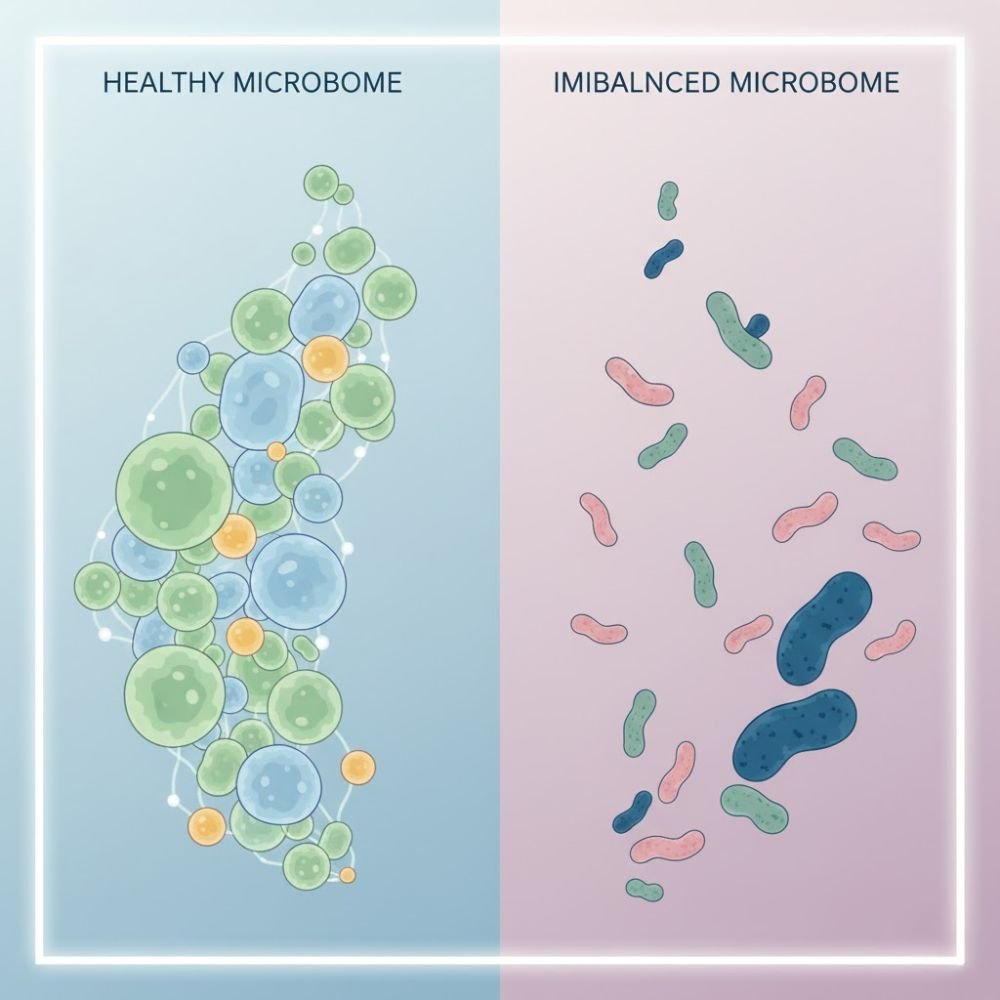
Deep in your intestines lives a vast community of bacteria, yeasts, and microbes — Deep in your intestines lives a vast community of bacteria, yeasts, and microbes — your gut microbiome. When this ecosystem is balanced, digestion is smoother, gas is better handled, and your immune system and even mood can benefit.
1. Fermentation & Gas
Gut bacteria ferment parts of your food. With the right balance, this helps digestion. But when certain microbes overgrow, gas and bloating can intensify.
2. Gut–Brain & Sensitivity
Your gut and brain constantly talk. In some people, the gut becomes hypersensitive, so normal amounts of gas feel painfully “too much.”
3. Barrier & Inflammation
When the gut lining is irritated, bloating, cramps, and irregularity can become chronic. Supporting a healthier microbiome is one way to help.
That’s why many experts now see bloating not just as a “food problem,” but as a microbiome and motility problem — especially in women with IBS, food sensitivities, or a history of antibiotics.
Why Women Can Feel Bloating More Intensely
Women’s bodies are uniquely sensitive to gut shifts, hormones, and lifestyle changes. Across the month, hormonal fluctuations can slow down digestion, increase water retention, and change how the gut feels.
On top of that, the balance of bacteria in the gut is closely linked to vaginal and urinary health. When the microbiome is disturbed (from stress, antibiotics, diet, or illness), bloating may show up alongside other issues like discomfort, recurring infections, or low energy.
Supporting the microbiome with the right strains — not just any random probiotic — is one way many women try to regain a calmer, more comfortable gut.

Hormonal fluctuations, slow digestion, and microbiome changes make women more prone to bloating.
Always follow the product label and your healthcare provider’s advice.
A Women-Focused Probiotic to Support Bloating, Digestion & Feminine Wellness
If your diet is already relatively healthy but your gut still feels off, a targeted, high-quality probiotic can be one more lever to support comfort.
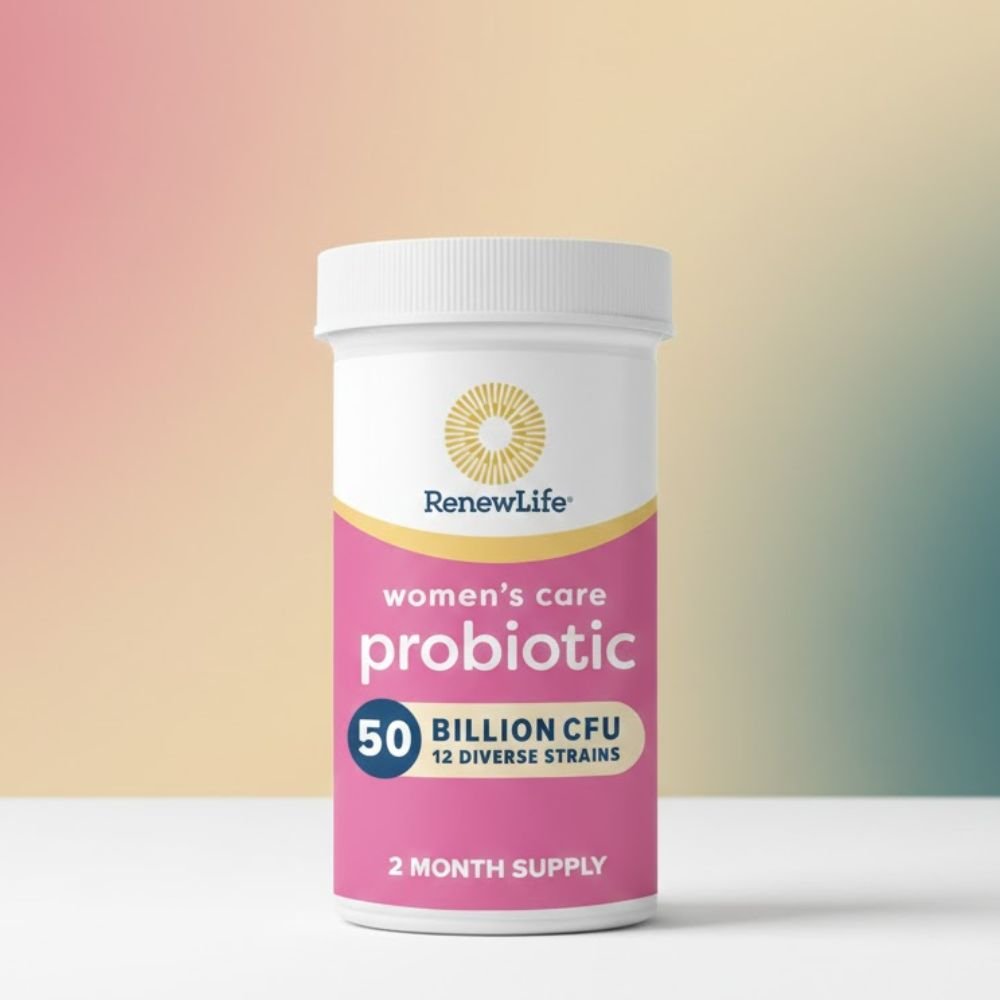
Renew Life Ultimate Flora Women’s Care Probiotic (25 Billion) is designed specifically for women, with a blend of 10 probiotic strains and 25 billion live cultures per capsule to support both digestive and vaginal health.
What stands out about this formula:
- Once-daily capsule with 25 billion CFU of live cultures
- 10 different probiotic strains (including Lactobacillus species that naturally dominate the vaginal microbiome)
- Designed to support digestive balance, immune health, & feminine comfort
- From a well-known brand specialized in digestive health supplements
- Vegetarian capsules; free from many common allergens according to the label
No probiotic is a magic cure, but many women use this kind of formula as part of a broader routine: gentler eating habits, stress management, and gut-friendly foods.
🌿 View Renew Life Women’s Care Probiotic on Amazon
How to Use a Probiotic Like This Smartly
Always read the product label first and speak with your healthcare provider if you have medical conditions, are pregnant, nursing, or take medications.
- Most women take 1 capsule daily (as directed on the label).
- Try to take it consistently, ideally around the same time each day.
- Give your body at least a few weeks to notice gradual changes.
- If you feel worsening symptoms, stop and talk to a healthcare professional.
Probiotics work best as part of a bigger picture: more whole foods, less ultra-processed snacks, enough sleep, movement, and stress relief.
Simple Daily Tweaks That Can Ease Bloating
- Eat more slowly; chew thoroughly to reduce swallowed air.
- Try smaller, more frequent meals instead of huge plates.
- Go for a 10–15 minute walk after meals to support motility.
- Introduce high-fiber foods gradually, not all at once.
- Track possible trigger foods (dairy, gluten, certain fruits, etc.).
These habits are not a substitute for medical care, but they often make a noticeable difference alongside any supplement routine.
What Other Women Are Saying

Many reviewers mention improvements in bloating, regularity, and overall comfort when taking a women’s probiotic like this consistently. Individual results always vary.
High average rating from thousands of reviews on Amazon (at the time of writing).
“The Best Probiotic I’ve Tried!”
I love these Renew Life Women’s Care probiotics! They’ve helped me a lot with my digestive system. Every other probiotic upset my stomach or gave me side effects, but these are perfect. No bad reactions, and I feel so much better.
— Claudia Cala Garcia
“Feeling Better Every Day”
My anxiety has decreased since the first week and keeps improving. A pharmacist recommended this probiotic to me and I’m so glad I tried it. I feel better overall and highly recommend it.
— Mitzi Arnold
“Works Great & Good Price”
This helps with women — it works great, and the price is right. Very satisfied so far and will keep using it.
— Cheryl Miller
Trusted Resources on Bloating, Gut Health & Probiotics
- Harvard Medical School – “The gut–brain connection” – Read on Harvard Health
- National Institutes of Health – “Probiotics: What You Need To Know” – Read on NCCIH (NIH)
- Cleveland Clinic – “Bloating: Causes & When to See a Doctor” – Read on Cleveland Clinic
- Cleveland Clinic – “What Is Your Gut Microbiome?” – Learn more
- Johns Hopkins Medicine – “The Brain–Gut Connection” – Explore on Johns Hopkins
FTC Disclosure: This page contains affiliate links. If you choose to purchase through these links, we may earn a small commission at no additional cost to you. We only recommend products we believe can be helpful as part of a balanced lifestyle.
Medical Disclaimer: This content is for informational and educational purposes only and is not a substitute for professional medical advice, diagnosis, or treatment. Always talk with your doctor or qualified health provider about your specific situation.
FDA Disclaimer: Statements about dietary supplements have not been evaluated by the Food and Drug Administration. These products are not intended to diagnose, treat, cure, or prevent any disease.
Results Disclaimer: Individual experiences with probiotics and diet changes vary widely. No specific outcome can be guaranteed.