LONG SITTING • BACK STRAIN • POSTURE
Sitting for Hours With Back Pain or Stiffness?
Modern work life keeps us glued to chairs — but your spine was never designed for long, static sitting without support. Over time, that “normal” posture can silently overload your lower back.
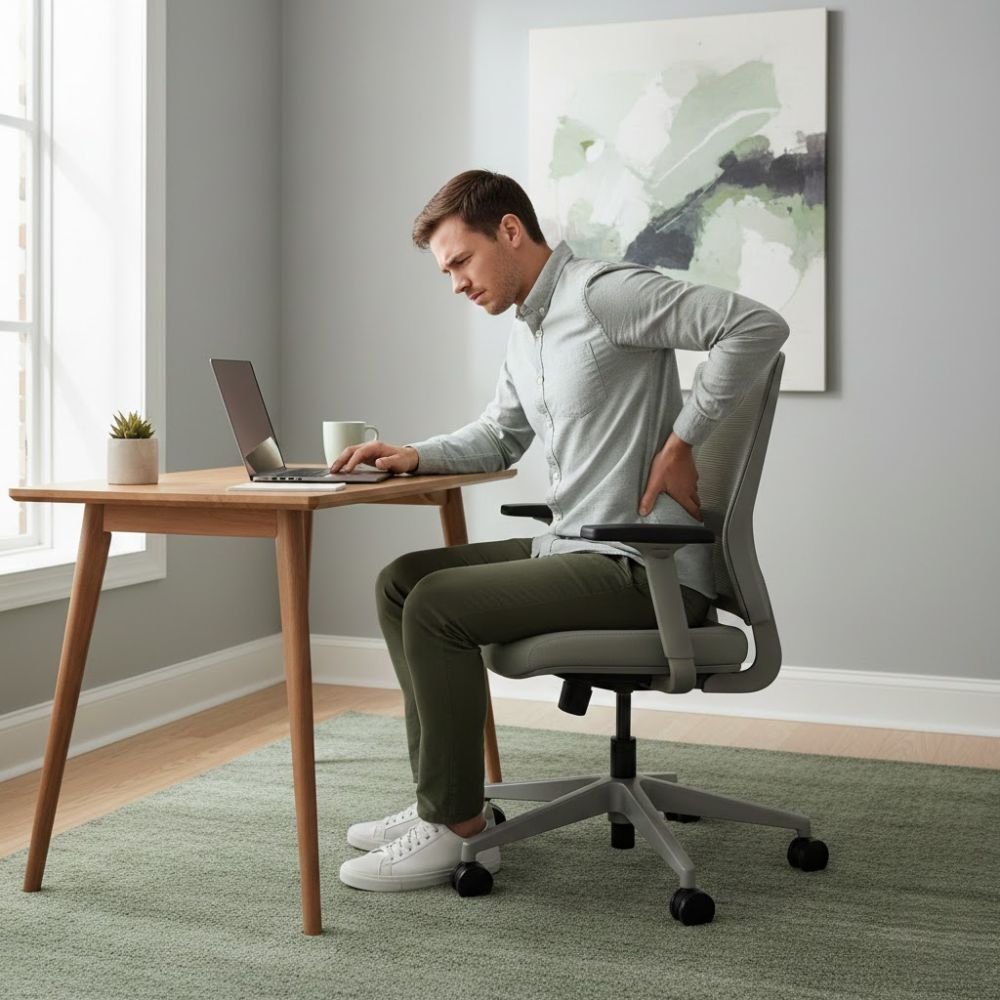
🪑 Your Chair Isn’t the Only Problem — It’s How Your Spine Is Supported
During long meetings, remote work, or study sessions, most people slowly slide into a slouched posture: rounded shoulders, head forward, and a flattened or reversed lumbar curve.
This doesn’t just “feel uncomfortable” — over time it can increase pressure on the discs, strain the muscles, and contribute to chronic lower back pain. The good news? A few smart adjustments can turn your chair into a much healthier place for your spine.
What Long Sitting Really Does to Your Back
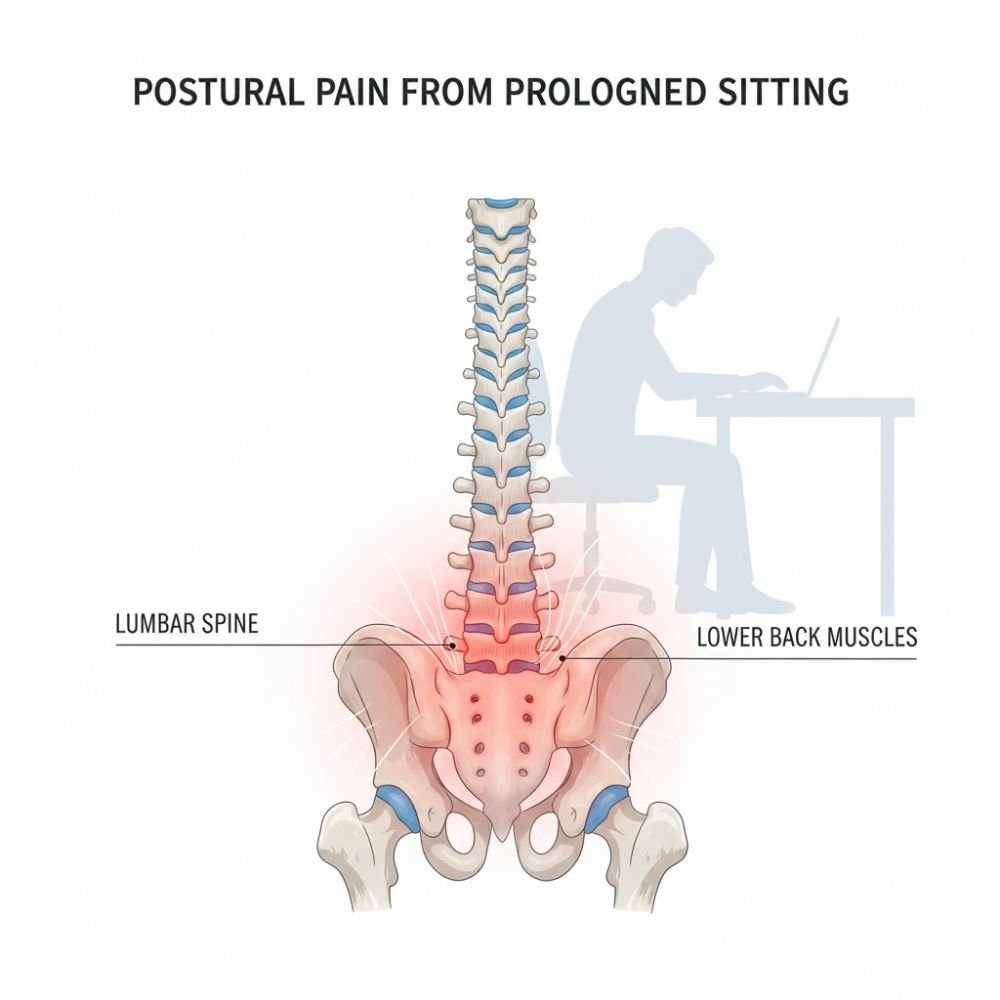
Health experts estimate that many adults spend more than half of their waking hours sitting — at desks, in cars, or on the couch. Prolonged sitting with poor posture is linked to increased pressure on the lumbar spine, muscle fatigue, and higher rates of lower back pain.
1. Flattened Lumbar Curve = More Disc Pressure
When you slump, the natural inward curve of the lower back flattens. This shifts load toward the back of the discs and surrounding structures, which can increase discomfort and wear over time.
2. Tired Muscles Have to Work Overtime
The longer you sit without support, the harder your postural muscles must work just to keep you upright. As they fatigue, you compensate with even poorer posture — a cycle that can worsen pain.
3. Small Daily Stresses Add Up
Even if you don’t feel intense pain today, hours of unsupported sitting every day can create micro-stress on joints, ligaments, and muscles that adds up over months and years.
4. Movement & Micro-Breaks Matter
Simple strategies — like standing regularly, changing positions, and supporting the lower back — can help counteract the effects of long sitting and reduce strain on the spine.
Why Lumbar Support Is So Important When You Sit
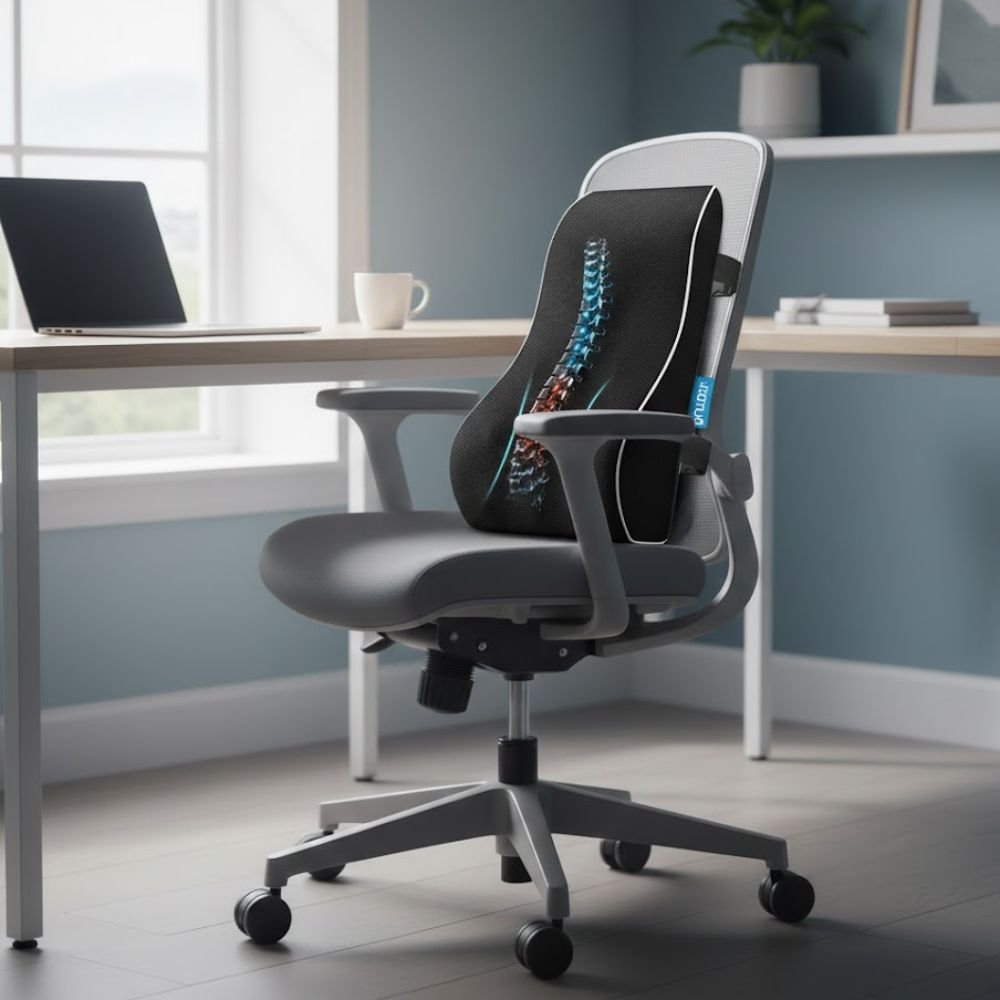
Ergonomics research shows that supporting the natural curve of the lower back can help distribute pressure more evenly and reduce strain on spinal structures. Maintaining a more neutral posture is easier when the chair “meets” your spine instead of leaving a gap behind it.
- ✅ Promotes a neutral lumbar curve: a properly shaped support fills the space between your lower back and the chair.
- ✅ Reduces muscle fatigue: when the spine is supported, postural muscles don’t have to fight to keep you upright.
- ✅ Encourages better overall posture: supporting the base of the spine often improves alignment of the shoulders, neck, and head.
- ✅ Fits modern “sitting lives”: whether you’re at a computer, driving, or studying, lumbar support can go with you.
Instead of accepting back discomfort as a “normal” part of sitting, you can use simple tools to help your body sit in a way that feels more supported — hour after hour.
LUMBAR SUPPORT • OFFICE • CAR • HOME
Turn Almost Any Chair into a More Back-Friendly Seat
One practical way to support your lower back during long sitting is to use a well-designed lumbar support pillow — especially if your current chair doesn’t offer much built-in support.
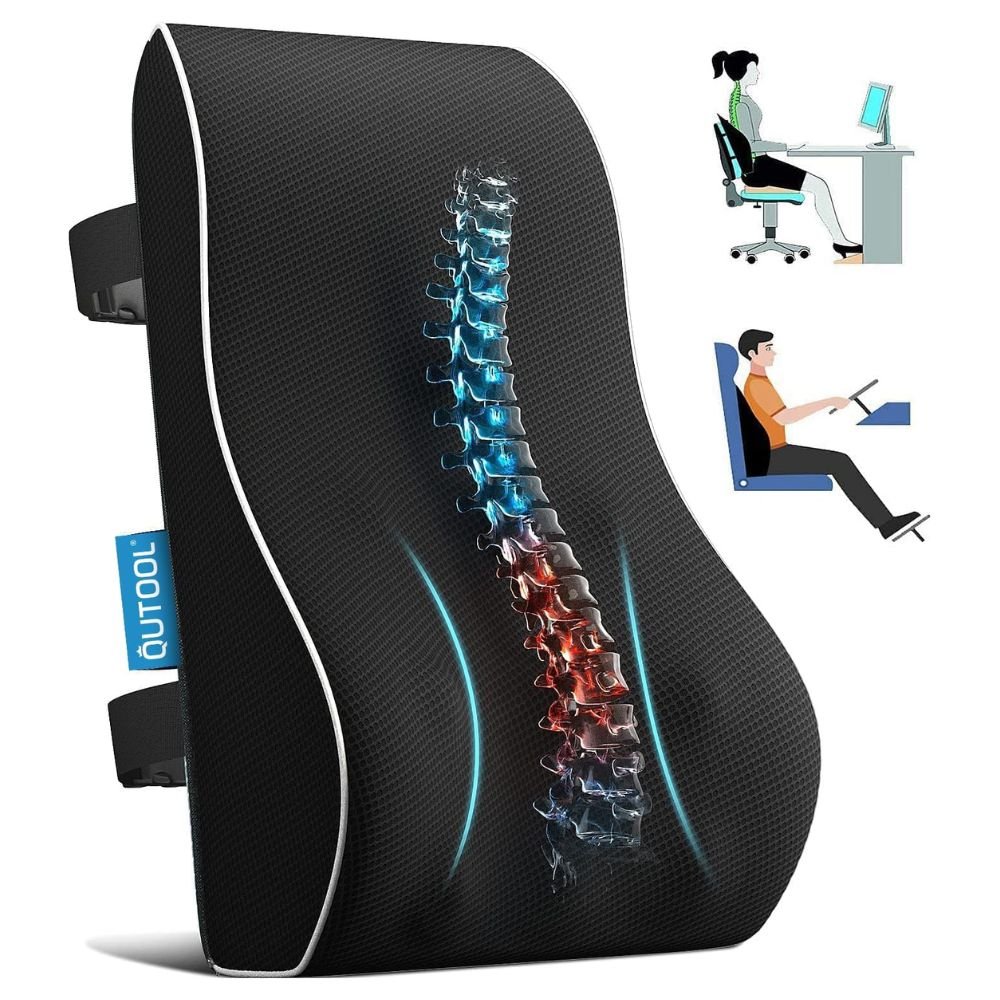
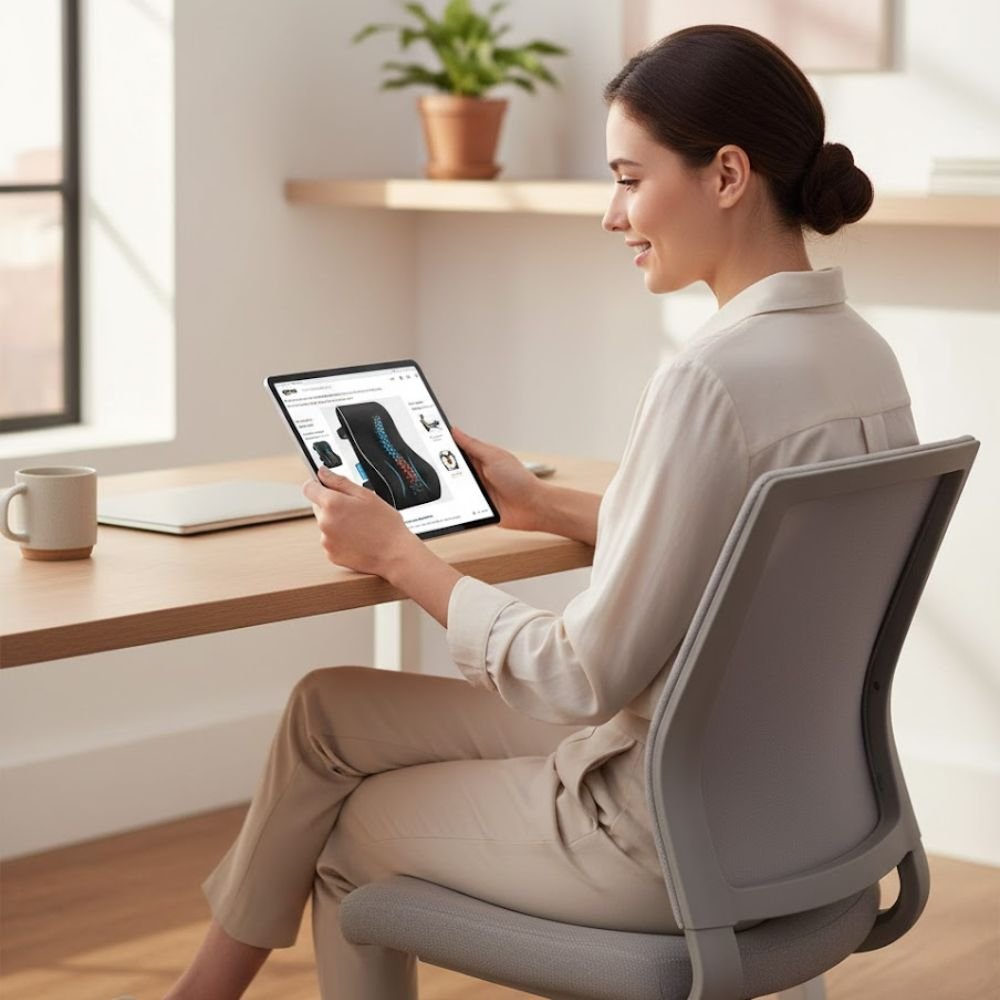
The pillow highlighted here is the QUTOOL Lumbar Support Pillow for Office Chair , made with high-density memory foam and a contoured design to follow the natural curve of your lower back. It includes adjustable straps so you can secure it to many different chair types.
- ✅ High-density memory foam that holds its shape instead of flattening quickly.
- ✅ Ergonomic curve designed to support the lumbar region, not just “pad the back”.
- ✅ Adjustable straps to help keep it in place on office chairs, gaming chairs, or car seats.
- ✅ Breathable mesh cover to help keep you cooler while you sit.
This is an affiliate link. If you choose to purchase, we may earn a small commission at no extra cost to you.
Ready to Make Sitting Time Easier on Your Back?
You may not be able to avoid long sitting completely — but you can change how your spine experiences it. Adding proper lumbar support is one of the simplest ways to help your lower back feel more supported during work, driving, or study.
🔗 Get the QUTOOL Lumbar Support Pillow on Amazon📚 Trusted Health & Ergonomics Resources
- Harvard Health Publishing – “Why sitting too much is bad for your health” Read on Harvard Health
- Mayo Clinic – “Back pain at work: Preventing pain and injury” View article
- Cleveland Clinic – “Low Back Pain” Learn more
- Canadian Centre for Occupational Health and Safety – “Sitting at Work” Ergonomic guidance
FTC Disclosure: This page contains affiliate links. If you decide to purchase through these links, we may earn a small commission at no additional cost to you. We only highlight products that fit the topic and that we would consider using ourselves.
Health Disclaimer: This page is for educational purposes only and does not replace professional medical, ergonomic, or physiotherapy advice. Always consult your healthcare provider about persistent or severe back pain, or before making major changes to your work setup.
Results Disclaimer: Individual comfort and results may vary depending on posture, chair type, activity level, and overall health. No specific outcomes are guaranteed.